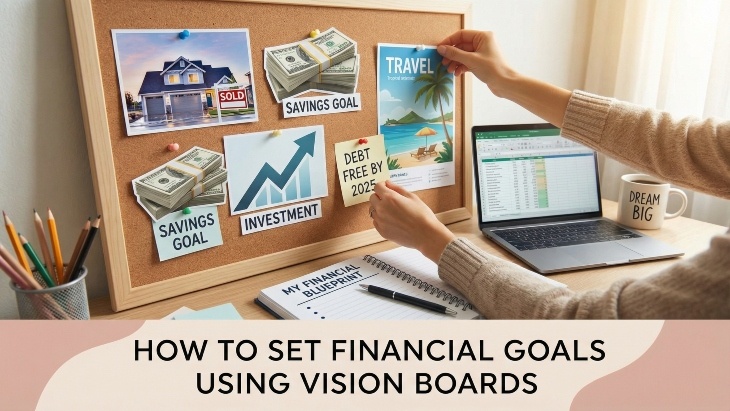
Setting financial goals is something I see a lot of people talk about, but honestly, keeping them top of mind is where things get tricky.
I’ve been there; excited to save up, get out of debt, or finally build that emergency fund, but after a couple of weeks, those plans tend to slip into the background.
Vision boards can make all the difference.
When I started using vision boards for my financial goals, I noticed I paid more attention to my targets and felt emotionally connected to what I wanted.
Suddenly, money wasn’t just numbers in an app; it was part of a bigger picture I wanted for my life.
Having those goals visible keeps them front and center every day. In this practical guide, I’ll walk you through exactly how to set financial goals using vision boards so you can move from just wishing for results to actually seeing them happen.
Why Vision Boards Work for Financial Goals
Vision boards aren’t just a fun arts and crafts project.
Making your money dreams visual is pretty powerful for a few reasons. Visualization helps you focus your attention on what truly matters, not just what pops up in the moment.
When you keep your goals in mind every day, you’re more likely to stay on track, even when that new gadget or dinner out is calling your name.
There’s real science behind it, too.
Visualization exercises have been shown to activate brain pathways linked to motivation and decision-making.
Simply put, when you see what you’re working for, you’re better at making choices that line up with your goals.
Plus, making your financial goals visual taps into your emotions, which is a big piece of follow-through. You’re not just tracking numbers; you’re connecting your daily actions to the vision you have for your future self. This is why having money goals on your vision board can boost your chances of sticking to your plan, rather than drifting away from it.
Want some practical tips on how to actually stick to financial goals or wondering how to handle money mindset blocks?
You might find those ideas pretty handy as you build your vision board, too.
1. Define Clear and Specific Financial Goals First
I start by getting specific about what I want for my money.
Vague goals like “get rich” or “have more” don’t really give me much to work with, and they’re harder to make visual.
I like breaking my goals down into short-term and long-term plans. Short-term goals might be things like saving $500 in three months or paying off a credit card by December. Long-term goals could include saving for a down payment, reaching a certain net worth, or investing for retirement.
Getting clear and specific means putting numbers and dates on my goals whenever possible.
If I want to pay off $3,000 in student loans by next June, that’s not just a wish; it’s a target I can plan around. This step lays the foundation for my whole vision board, so I always start here before pulling out magazines or opening Canva.
2. Break Big Financial Goals Into Visual Categories
My vision board gets a lot easier to build once I organize my goals into categories.
Otherwise, it turns into a hot mess with images everywhere and no focus. I usually break mine down like this:
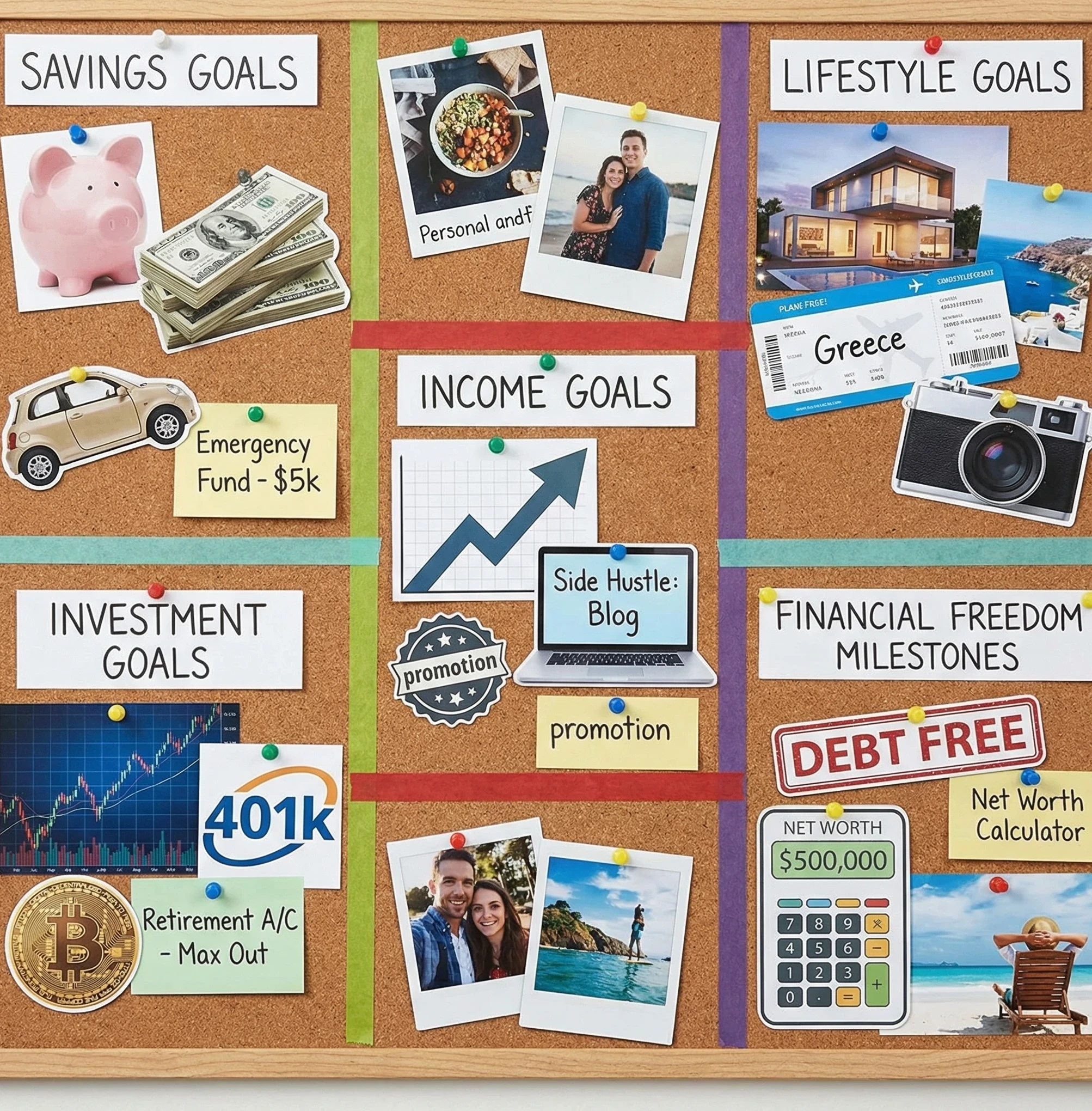
- Savings goals: Emergency funds, vacation savings, first car savings, etc.
- Investment goals: Stock market targets, retirement account balances, crypto milestones.
- Income goals: Side hustle targets, yearly salary increases, passive income streams.
- Lifestyle goals: Big purchases, home upgrades, dream trips, educational funds.
- Financial freedom milestones: Paying off debt, reaching a certain net worth, and being able to quit a job.
I carve out a section for each so I don’t get lost, and my board feels organized rather than chaotic.
3. Choose Images That Represent Financial Outcomes
Next, I look for visuals that feel motivating and connect to my specific goals.
I’m picky about the images I pick, since they need to spark something for me, not just look pretty.
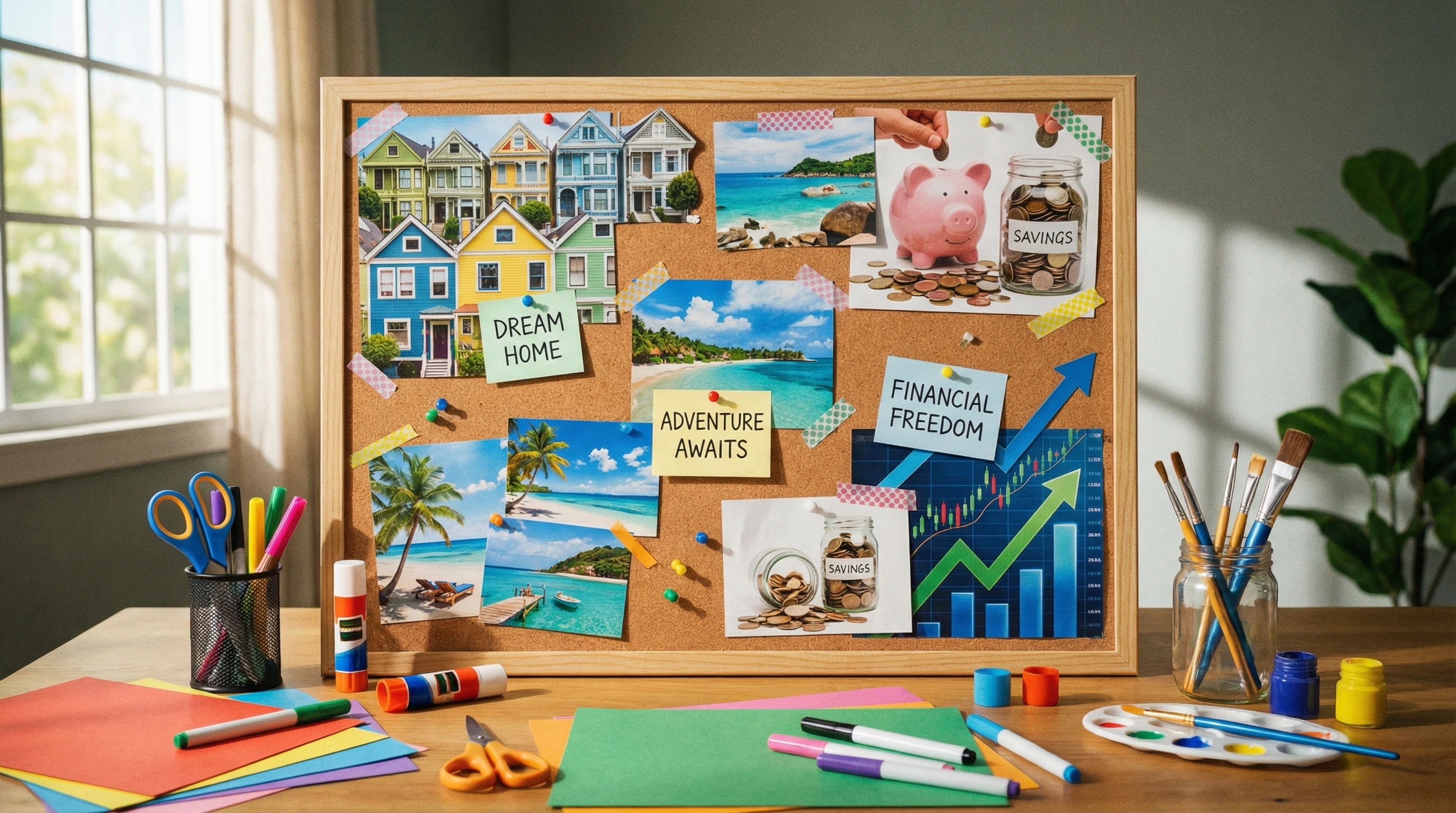
For a debt-free goal, I might use a photo of a zero-balance credit card statement or a smiling piggy bank. For income growth, images like overflowing jars of coins or upward-trending graphs do the trick.
I gravitate toward pictures that prompt emotional excitement; maybe a cozy home for a down payment goal, a relaxing tropical beach for my vacation fund, or a “Congratulations!” banner next to a savings milestone.
It’s all about how those pictures make me feel.
Numbers and spreadsheets are important, but the feelings those goals bring out are what get me off the couch on rough days.
Choosing powerful, emotionally charged images really amps up the effect. For instance, some people fall in love with images of countryside homes or bustling city apartments, depending on their vibe.
Others go for snapshots of journals filled with savings logs, or even photos of fun experiences they want to save for, like a family outing or a learning adventure.
The goal is to make each section of your vision board instantly bring your feelings into focus.
Trust your gut and select visuals that truly connect—don’t settle for just generic images. This way, you’ll find yourself energized to keep chasing your goals, especially when motivation dips.
4. Add Specific Numbers and Deadlines
This is where things get real. I always write down exact numbers right on the vision board, like “Save $2,500 by 10/15” or “Invest $50 per week in an ETF.”
I’ve found that seeing a specific target keeps me way more honest about where I’m heading.
I add these details on sticky notes, bold printouts, or timelines drawn across the board. Sometimes, I’ll even stick a calendar cutout next to my goal, with the deadline marked.
Adding this layer is a simple accountability hack that pushes me to check my progress.
When you want to grow your investments, you might also enjoy these super useful resources: how to build a balanced investment portfolio and how to start investing with a small budget. As you go, don’t hesitate to update these targets; flexibility makes your board feel current and truly yours.
5. Place Your Vision Board Where You’ll See It Daily
My board isn’t doing much good if it’s stuffed in a drawer.
I make a point to hang mine somewhere I’ll actually look at it. The wall by my desk, the inside of a closet door, or even a digital version as my phone wallpaper all work well.
It sounds simple, but seeing my goals every day really keeps them front and center.
I find digital tools like Canva, Pinterest, or even a collage on Google Slides are super handy if I want to take my board on the go.
This repeated exposure helps keep my mindset locked onto what I want to achieve.
To help stay connected, I’ll take a quick photo of my board for my phone or set a calendar reminder to look it over at breakfast a few days a week.
Regular reminders keep my energy focused and help me resist financial distractions.
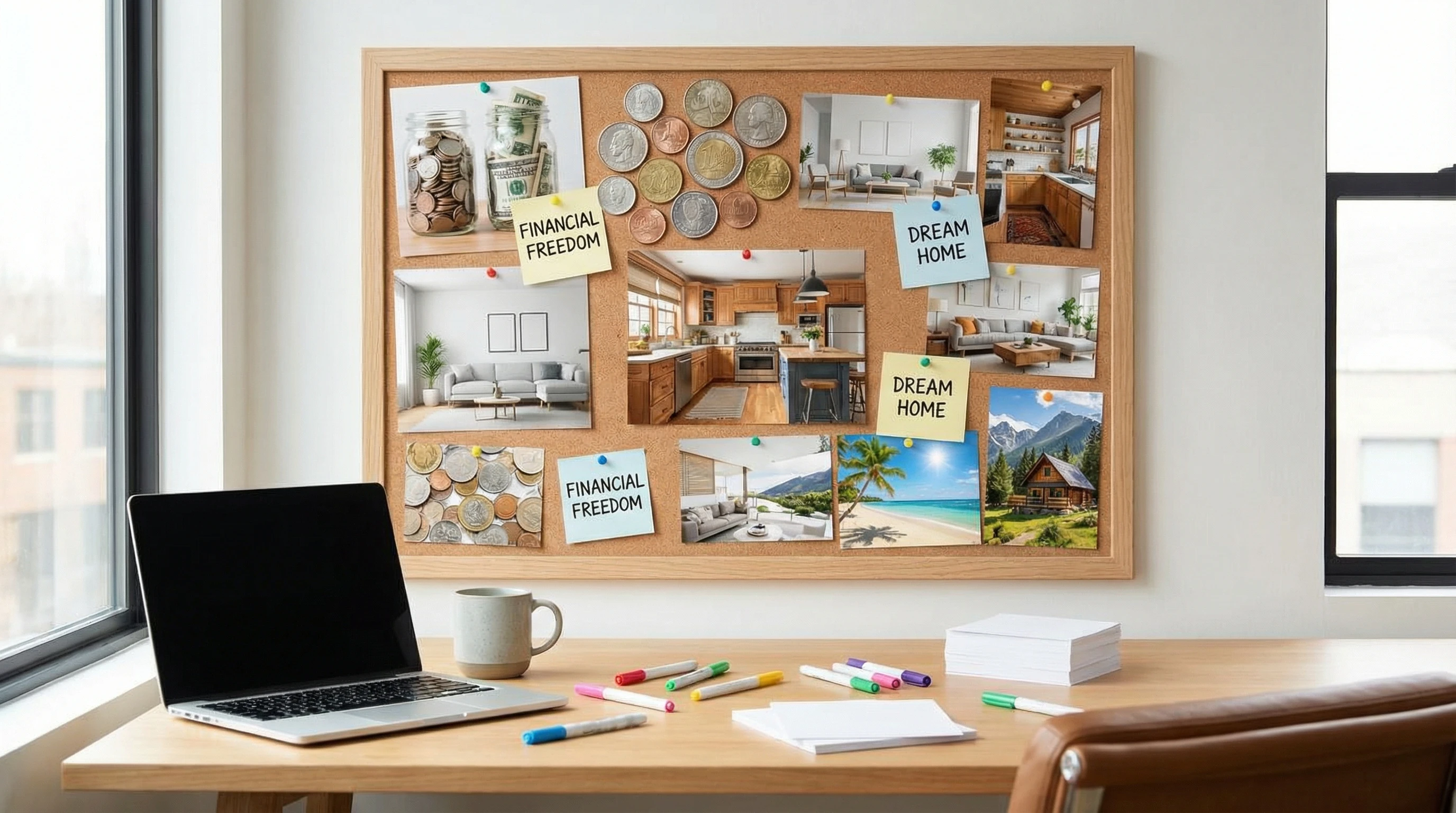
6. Align Your Daily Financial Habits With Your Vision
Vision boards give me the “why,” but hitting those goals day to day comes down to habits.
I make sure my budget actually lines up with what’s on my board.
If saving for a down payment is a top priority, I set up an automatic transfer into my savings account each payday. For paying off debt, I’ll track my extra payments on a visible chart. Reviewing my budget weekly helps me tweak things, and I celebrate little milestones to keep myself motivated along the way.
Tracking spending is another habit I pair with my vision board.
If I notice my spending isn’t matching my vision, I reassess.
Staying honest and reviewing my numbers keeps the board from becoming just a set of pretty pictures.
It helps to set mini-goals, like making one extra payment this month or finding a $20 cut in a recurring bill.
These small wins move me closer to my big vision, and seeing progress—even tiny steps—makes me stick with it for the long haul.
7. Update and Adjust Your Vision Board Quarterly
Life moves fast, and my financial goals do too.
Every few months, I take time to review my vision board and see what’s changed.
Maybe my income has grown, my priorities have switched up, or I’ve knocked out a goal and want to add something new.
I’ll swap out old images, update numbers, and keep everything feeling fresh and in sync with where I’m actually headed.
This regular check-in keeps me from drifting and helps me stay excited about what’s next.
When those big or small progress wins happen, I reward myself with a fresh photo or goal added to my board.
It does wonders for motivation!
If you get stuck, ask a friend or accountability partner to look at your board with you—they might spot wins or ideas you missed.
Fresh eyes bring new energy when your own excitement starts to dip.
8. Combine Visualization With Skill Building and Income Growth
Looking at inspiring images is nice, but action makes everything happen.
My approach: treat vision boards as the first step, with skill-building as the follow-through.
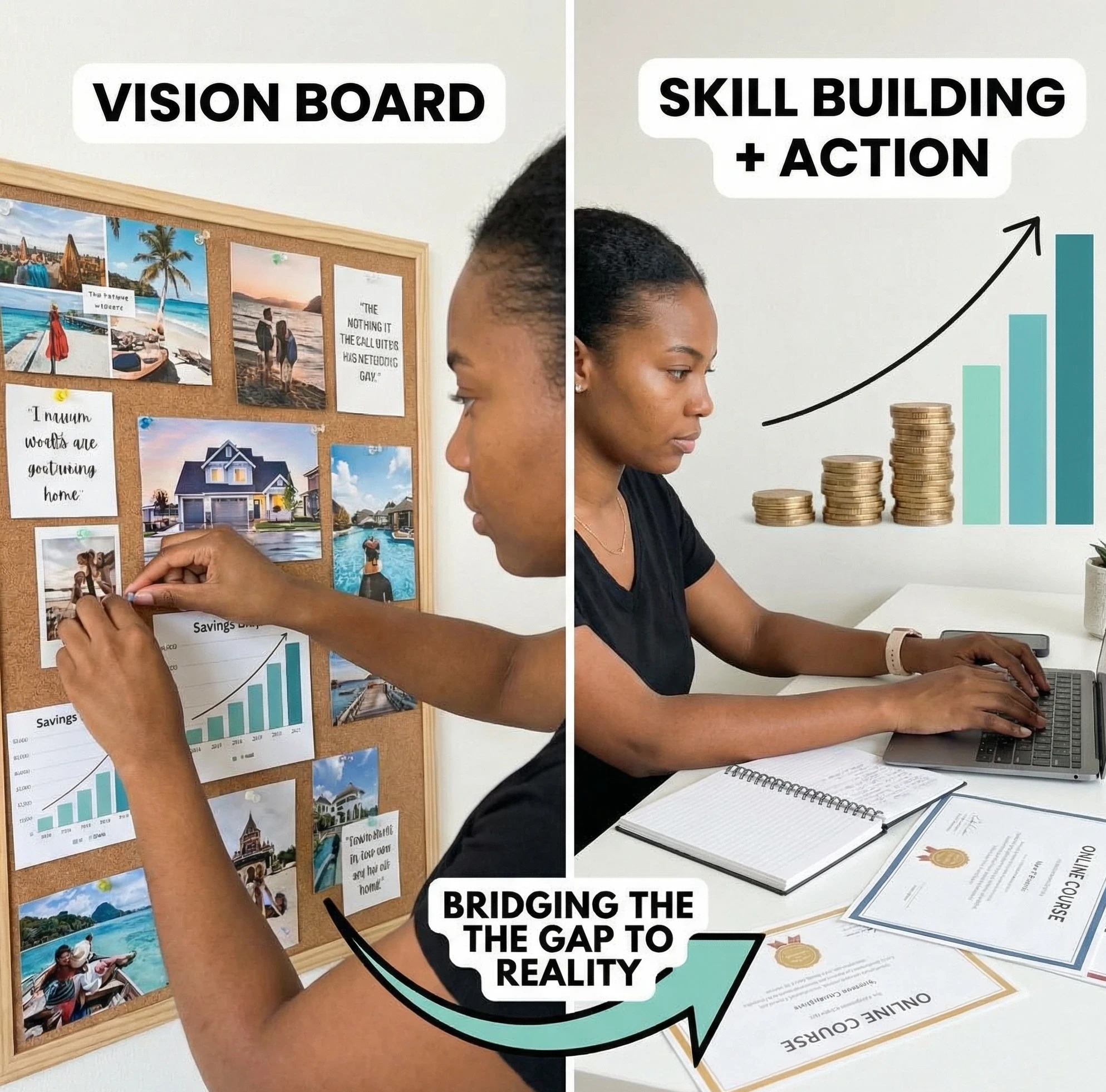
Maybe I need to read up on investing, start a side hustle, learn a new skill, or find ways to grow my income. Every quarter, I choose at least one new thing to learn or try that moves me toward my board’s targets.
This practical step bridges the gap between wishes and actual wealth.
As my skillset grows, what’s possible for me financially opens up, and I can set even bigger goals.
Pairing creativity with consistent action really turns those board visuals into real-life wins.
Whether it’s taking an online course, joining a money challenge, or shadowing someone who has hit similar goals, adding skills makes my aspirations feel doable. Soon, what was once just an inspiring image becomes something within reach—and then reality.
Common Mistakes When Using Vision Boards for Money Goals
- Being too vague: “Be wealthy” or “make more money” isn’t specific. Precision wins.
- Not reviewing regularly: If you never look at it, your vision board can’t do its job. Consistency is super important.
- Ignoring actionable steps: Images need matching habits and plans to succeed.
- Treating it as motivation only: A vision board should guide your actions, not just pump you up for five minutes and be forgotten.
I’ve learned from my own messy boards that making them too broad or ignoring the action side leaves them feeling nice to look at, but kind of useless in practice.
Dialing in specifics and linking habits turns them into powerful tools.
To avoid wasting your effort, revisit your board with a critical eye and ask: Does every image connect to a clear action or next step? Am I checking in often, or just hoping the visual magic does all the work?
Final Thoughts – See It, Plan It, Build It
Every time I use a vision board to get my financial plans out of my head and into the real world, I notice big changes in how I move toward those goals.
Visualization keeps my focus sharp, and pairing that with daily habits and regular reviews helps me take real steps forward.
Consistency pays off over time, so I stick with it, tweaking and growing as I go. If you’re ready to create a future where your money works for you, it all starts by getting clear on your vision and making it visible, actionable, and exciting to reach.
Be patient with yourself as you start.
Building new habits and seeing results can take time, but the journey is worth it. Keep celebrating every win, no matter how small, and let your board remind you: The goals you want are closer than you think.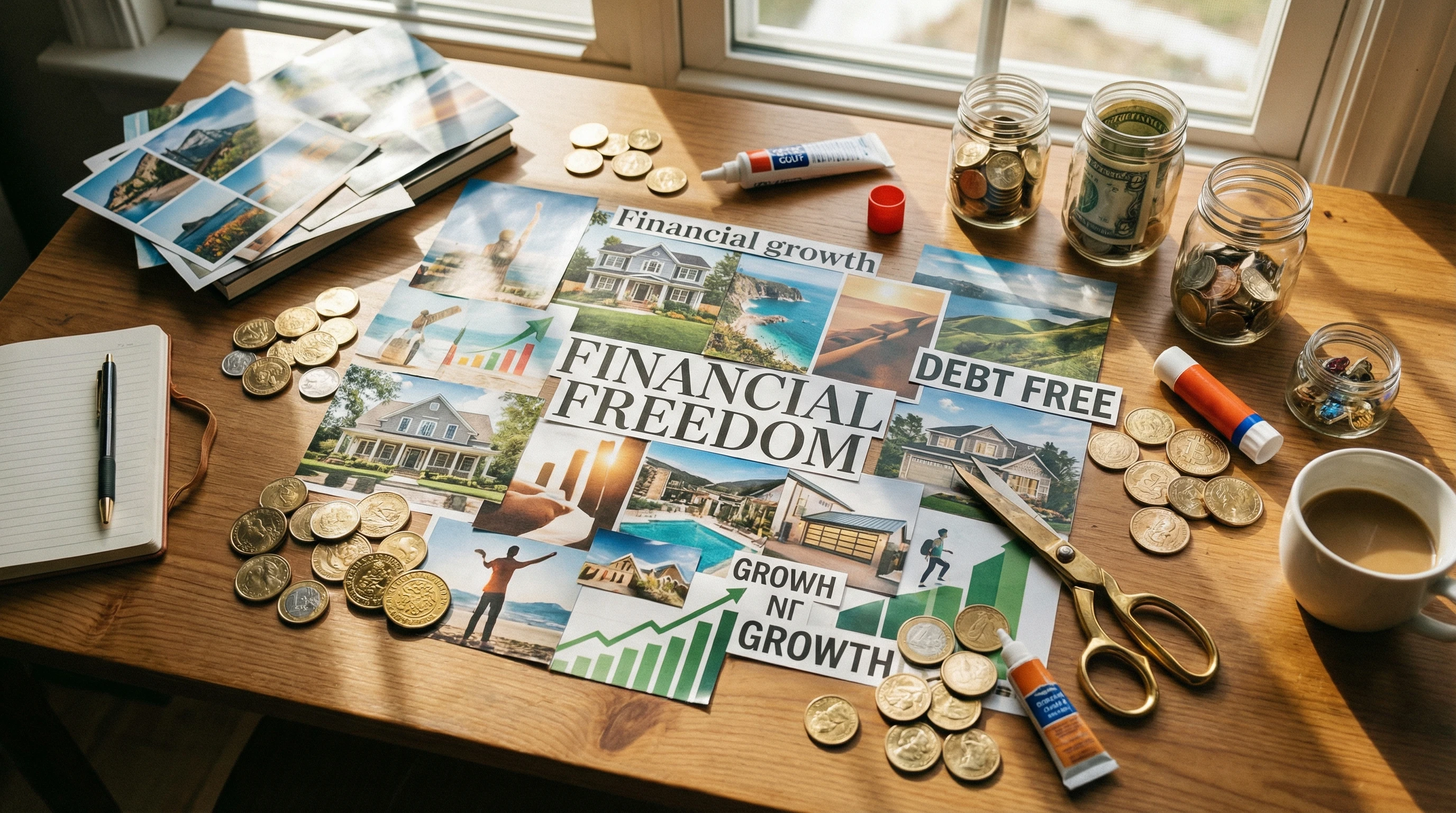
Ready to Turn Your Financial Vision Into Real Income Skills?
If you’re looking to speed up your financial goals in a real way:
- 🎥 Get FREE access to 4 powerful masterclass videos
- 📘 Plus a beginner-friendly guide to building sustainable online income
- 🚀 Learn how to create income streams that support your long-term financial vision