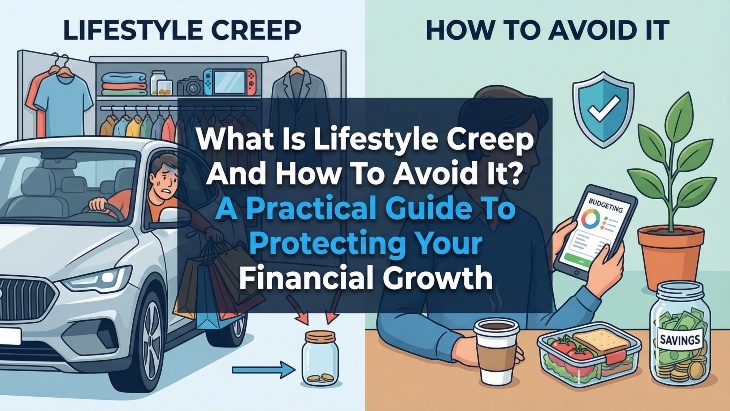
You just landed a bigger paycheck, but somehow your savings aren’t moving up.
Maybe you’re still feeling that financial pinch, even with more money coming in. This quiet cycle is often called lifestyle creep, and it can easily go unnoticed.
I’ll walk you through what lifestyle creep is, how it works, and exactly what you can do to avoid it. That way, your income actually helps you build wealth, not just fund extra expenses.
What Is Lifestyle Creep?
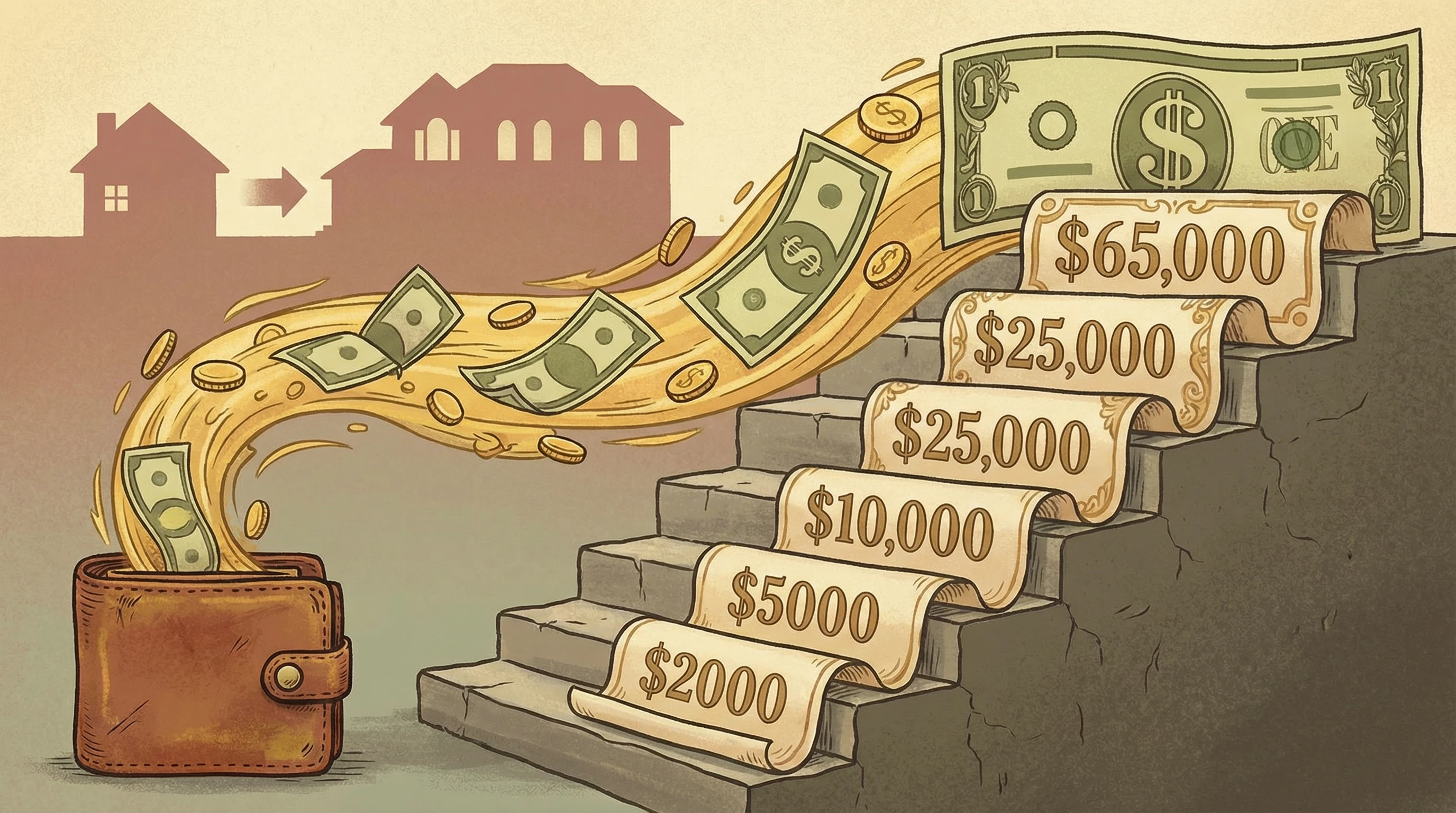
Lifestyle creep, also called lifestyle inflation, is when you start spending more as your income goes up.
It’s usually not a huge leap all at once.
It’s more like small upgrades or new habits that slowly add up.
At first, grabbing nicer coffee each morning or choosing that fancier apartment can seem pretty harmless. But over time, these upgrades pile on, making it tough for your savings or investments to keep up with your higher income.
Common examples include:
- Upgrading your car after a promotion, even when the old one worked just fine.
- Eating out more often, thinking, “I can afford it now.”
- Stacking up subscriptions for entertainment, software, or delivery services.
- Moving to a pricier home, stretching your new budget to the limit.
Because lifestyle creep often happens in small increments, it rarely feels like a big problem.
But then, you realize your higher income hasn’t led to bigger savings.
Why Does Lifestyle Creep Happen?
Several forces can pull you into the cycle of lifestyle creep.
For me, the biggest factor was a feeling of reward after getting a raise.
I’d worked hard, so I deserved to live better, right? That mindset is super common, and it makes every little “upgrade” easy to justify.
Social pressure plays a big role as well. If your friends spend more or show off their latest gadgets, it’s easy to feel left out unless your own spending keeps up.
Other causes I’ve noticed include:
- Higher expectations. You get used to a certain standard really fast. Once you’ve upgraded, the idea of going back is tough.
- No clear budget. Without a spending plan, it’s easy for extra money to trickle away on extras that don’t really matter.
- Emotional spending. Sometimes spending more is a way to signal success or feel better about your hard work.
If you want a deeper look at why we make certain choices with money, it’s worth checking out resources on overcoming money mindset blocks and how to stay committed to financial goals.
Signs You May Be Experiencing Lifestyle Creep
Awareness is really important here.
These warning signs usually appear before the problem gets big:
- Your income has grown, but your savings haven’t budged. Even after a raise, you’re somehow still living paycheck to paycheck.
- You find it harder to invest consistently. There’s always “one more thing” to buy first.
- You keep adding more monthly subscriptions; streaming, meal kits, apps, until your recurring bills look a lot heavier than before.
- You say “I deserve it” when justifying a new expense. It’s easy to think that more money equals more rewards, every time.
- Your financial targets keep getting delayed so you can cover new bills or splurges.
Recognizing these patterns early makes it much easier to reset and get back on track.
Why Lifestyle Creep Is Dangerous for Long-Term Wealth
Lifestyle creep might look harmless at first, but it can slow down your financial goals more than you’d think.
When each raise gets funneled into new expenses instead of savings or investing, you risk:

- Missing investment opportunities. Less free cash means fewer contributions to your retirement, brokerage accounts, or property investments.
- Delaying your financial independence. More expenses mean you’ll need more income (and more years of working) before you can step away or retire early.
- Becoming dependent on a higher income. If your pay drops or your job situation changes, those recent upgrades might be tough to maintain.
- Reducing your financial flexibility. Unexpected costs or emergencies hit a lot harder when your spending is already maxed out.
- Increasing your financial stress. The pressure to “keep up” only grows as your lifestyle gets pricier.
Building true wealth means letting your income create more options, not just more bills.
If you want ideas on growing your investments, take a look at building a balanced investment portfolio
7 Practical Ways to Avoid Lifestyle Creep
1. Automate Savings and Investments Immediately After a Raise
If you get a pay bump, set up automatic transfers to savings or your investment account before your next paycheck even arrives.
Paying yourself first makes it harder to accidentally spend that extra money.
I’m a big fan of direct deposit splits at work; part goes to checking, and the rest moves to savings or investing before I see it.
This trick keeps my savings rate growing as my income does.
2. Set Clear Financial Milestones Before Upgrading Your Lifestyle
It’s tempting to spend more right away, but I always stop to define a goal first. Decide what you want to save, invest, or build up (like your emergency fund) before making any lifestyle jumps.
I sometimes use reverse budgeting: figure out how much I need to reach my goals, then work backward to find out how much I can spend.
3. Maintain a Lifestyle Gap
Try to keep your fixed costs (like rent, car payments, or subscriptions) well below what you can technically afford.
Living below your means keeps you nimble if things change and helps you funnel raises straight into building wealth instead of bigger bills.
I usually resist major upgrades on housing or cars, focusing only on what fits my life comfortably, not my max budget.
4. Track Spending Monthly
I started regularly checking my monthly expenses, and it made a big difference. Awareness is pretty powerful; you catch silent bill increases, those random impulse buys, and subscription creep before they snowball.
There are a bunch of budgeting apps that make it easy to get started. I also like to review last month’s spending alongside my income to make sure things aren’t drifting upward without me noticing.
5. Focus on Increasing Assets, Not Just Expenses
Every time you grow your income, challenge yourself to grow your assets, not your bills.
The more of your extra dollars that go into investments, rental properties, or savings accounts, the more your wealth multiplies.
I try to think like an owner, so every raise, windfall, or unexpected cash goes first to something that builds value for me.
6. Upgrade Intentionally, Not Emotionally
I make it a habit to pause before big purchases.
If I get a bonus, I’ll sit on it for a week before making changes.
This helps me avoid buying something just because somebody else did or because I’m feeling that “I owe myself” mood.
Instead, I check if the purchase truly fits my long-term goals and adds lasting value or happiness.
7. Build Additional Income Streams Instead of Just Raising Expenses
Relying on one paycheck is way riskier than it was in the past.
Add side hustles, investment income, or digital gigs, and you make your finances more stable.
That way, you’re less likely to overspend just because your salary went up. More income sources give you room to enjoy upgrades without any stress if work changes.
There are all kinds of opportunities out there waiting to be tapped, like freelance work, selling creative products, or exploring passive income apps.
Lifestyle Creep vs Intentional Lifestyle Growth
Wanting to improve your lifestyle isn’t wrong.
I love treating myself or making upgrades that honestly make life better. The difference comes down to being conscious.
Make upgrades for a real reason, not just because it “feels right” or to keep up with someone else.
Intentional lifestyle growth means you enjoy your earnings while still growing your wealth. You can find a good balance between enjoying your success and sticking to smart money habits.
It’s totally possible to upgrade your home, car, or hobbies without compromising your finances.
The goal is to make those choices in line with what you truly value, not just what’s popular or expected.
Final Thoughts. Control Your Lifestyle Before It Controls You
Growing your income should help you build real wealth, not just inflate your spending.
I’ve found that the small choices I make right after a raise, like automating savings, tracking my expenses, or pausing before big purchases, add up to a strong foundation.
It’s those little, everyday habits that really shape long-term outcomes.
Choosing intentional living gives you more freedom, more options, and way less stress over time.
When you decide where your money goes, instead of letting your spending run on autopilot, every raise or new dollar works harder for you.

Frequently Asked Questions
Here are some questions a lot of people have about lifestyle creep, saving, and upgrades:
What if I really want to enjoy some of my raise?
You absolutely can. Pick one or two areas that add real value to your life, maybe a trip or a hobby, while keeping everything else steady.
Just set clear savings or investment targets first, so you know your lifestyle upgrade isn’t holding you back in the bigger picture.
How do I spot lifestyle creep if my expenses rise slowly?
Regular spending reviews help a lot.
Stack up your monthly expenses from this year and last year to see what’s moving. Look for new recurring charges or upgrades that sneaked in. When in doubt, check if your savings rate has gone up with your income.
Is it okay to upgrade my home or car after a big promotion?
It can be, as long as you’re still building your net worth month after month.
Run the numbers: will the upgrade slow down your investment goals or make you feel stuck if your income changes? If not, and it brings you happiness, go for it. But keep these big jumps separate from every little lifestyle upgrade. That’s how creep happens.
How often should I check for lifestyle creep?
I review my spending every month and compare year-on-year a couple of times a year. If you’re feeling like your paycheck disappears too fast, that’s a good sign to check in right away.
Ready to Take Control of Your Financial Growth?
If you want your income to power up your life, without lifestyle creep getting in the way, I’ve put together something pretty handy for you:
- 🎥 Free access to 4 masterclass videos
- 📘 A step-by-step, beginner-friendly guide to building online income streams
- 🚀 Tips on creating income that grows your wealth, not just your monthly spending
👉 Access your free training bundle here

You Can Do This, You Can Beat The Lifestyle Creep…I am rooting for YOU!
Regards and Take Care
Roopesh