
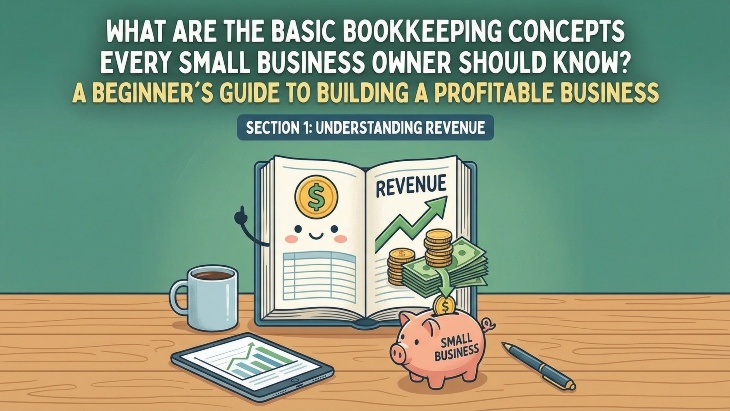
If you run a small business, the words “bookkeeping” probably bring on a bit of stress. I get that feeling; the details can pile up fast, and it’s easy to feel overwhelmed by all the different terms and records involved.
For many business owners, there’s a blur between bookkeeping, accounting, and filing taxes, making it tough to know what you actually need to track day to day.
On top of that, if you aren’t keeping tabs on your business finances, things like cash flow issues and surprise expenses pop up fast.
Here’s the good news: you don’t need to be an accountant to thrive; you just need a solid handle on the basic bookkeeping concepts.
In this guide, I’m going to break down all the essential bookkeeping ideas every small business owner should know, using simple language and real-world examples to make things feel less intimidating (and even a little interesting!).

Why Bookkeeping Is Really Important for Small Business Success
Bookkeeping is the backbone of every small business because it helps you track how much money is coming in and going out, not just for taxes, but for understanding if your business is healthy.
It gives you the details you need at tax time, makes managing cash flow a lot less stressful, and helps you spot potential issues before they become big headaches.
When your finances are clear and in order, you are much more likely to qualify for loans, attract investors, or simply grow on your own terms.
So having good books in place isn’t just nice to have, it is super important for any business looking to stick around for the long haul.
🔢 10 Basic Bookkeeping Concepts Every Small Business Owner Should Know
1. Revenue (Income)
Revenue is all the money your business earns from selling products or services. Most income for a small business is considered “operating revenue,” which is what you make from your main business activities.

You might also have “nonoperating income” such as interest from a savings account or a one time payment.
Tracking all sources of revenue accurately helps you spot trends, set sales goals, and avoid underreporting on your taxes.
For example, if you run a bakery, every cake and cookie sold counts as operating revenue, but money from renting out your kitchen space for a class one weekend would be nonoperating income.
2. Expenses
Expenses are all the costs needed to run your business. Some bills, like your shop’s rent or insurance, stay the same every month; these are “fixed expenses.”
Others, like ingredients or packaging, might change depending on how many customers you serve each month; these are “variable expenses.”
There are also “operating expenses” (the costs for actually running the business) and “nonoperating expenses” like interest payments.
Tracking every expense with a clear category helps you easily find tax deductions, create accurate budgets, and reduce waste. If you’re not sure how to build a plan, my 5 best budgeting apps for managing debts can help get you set up.
3. Profit (Net Income)
Here’s a common myth: having lots of revenue means you’re making money. In reality, profit is what’s left after subtracting expenses from your revenue.
“Gross profit” is your sales minus only the direct costs to make or buy what you sell, like ingredients or inventory.
“Net profit” (or net income) is what remains after taking away all other expenses, like rent, marketing, or utilities, on top of direct costs.
A business can have high revenue but still not make a profit if expenses are out of control, so always look at your net profit to see how your business is doing overall.
4. Cash Flow
Cash flow measures how much actual cash moves in and out of your business over a period of time. It’s really important because a business can be profitable on paper but still run out of actual cash if clients are slow to pay or you have big bills hit all at once.
Managing cash flow is about timing your money, making sure more comes in than goes out.
If you want some ideas on setting smart financial goals for steady growth, that’s worth checking out too.
5. Assets
Assets are all the valuable things your business owns or controls. These include cash, inventory, equipment, vehicles, and accounts receivable (money customers owe you).
For most small businesses, separating business from personal assets is really important.
For example, your business laptop and your personal phone shouldn’t get tossed on the same tally. Keeping them separate makes bookkeeping cleaner and prevents problems if you’re audited.
6. Liabilities
Liabilities are any debts or financial obligations your business owes to others. These can include loans, credit card balances, unpaid supplier bills (accounts payable), or tax obligations.
There are “short-term liabilities” (like bills due within a year) and “long-term liabilities” (like a three-year business loan).
Tracking these makes it easier to plan payments on time and avoid late fees or damaged credit.
Many small businesses find that regularly reviewing what they owe and creating a payment schedule helps with peace of mind and financial planning.
7. Equity
Equity is your ownership stake in the business; it’s basically the part left over for you after you subtract all liabilities from your assets.
The simple formula: Assets = Liabilities + Equity.
For sole proprietors, equity is sometimes called “owner’s equity.” If you’ve invested money into your business or left profit in the company instead of pulling it out, that adds to your equity.
Understanding this helps you track the real value you’ve built up in your business over time. When you see your equity growing, it is a strong signal that your business is adding value and that your efforts are paying off.
8. Accounts Receivable and Accounts Payable
Accounts receivable is money owed to you by clients (like outstanding invoices), while accounts payable is money you owe (like bills to suppliers).
Keeping these tallied up is really important for cash flow because it helps you follow up on late payments and pay bills without missing deadlines.
Sometimes just a quick reminder speeds up slow-paying clients, and that can make a real difference month to month.
Setting regular reminders in your calendar or choosing software that automatically flags overdue invoice can help you keep on top of both.
9. Double Entry Bookkeeping
If there’s one bookkeeping method that stands out for small businesses, it’s double-entry bookkeeping.
Every transaction gets entered twice: once as a debit in one account and once as a credit in another.
For example, if you buy supplies with cash, you record an expense (debit) and a decrease in your cash account (credit).
This method keeps your books accurate and balanced, and can flag errors early; super useful even if you use software for most of the recording.
Learning the double-entry system also gives you a better understanding of how your business transactions fit together.
10. Financial Statements
Financial statements are regular reports that pull all your bookkeeping together into a big-picture summary.
The three key reports are:
- Income Statement (Profit & Loss): Shows your revenue, expenses, and net profit for a certain time period.
- Balance Sheet: Lists your assets, liabilities, and equity so you know where your business stands at a certain date.
- Cash Flow Statement: Tracks the flow of actual cash in and out of your business, helping you spot timing issues.
Checking these regularly helps you make smarter decisions, plan for the future, and spot financial trouble early on.
You can use these statements not only to approach lenders, but also to identify patterns and predict seasonal trends.
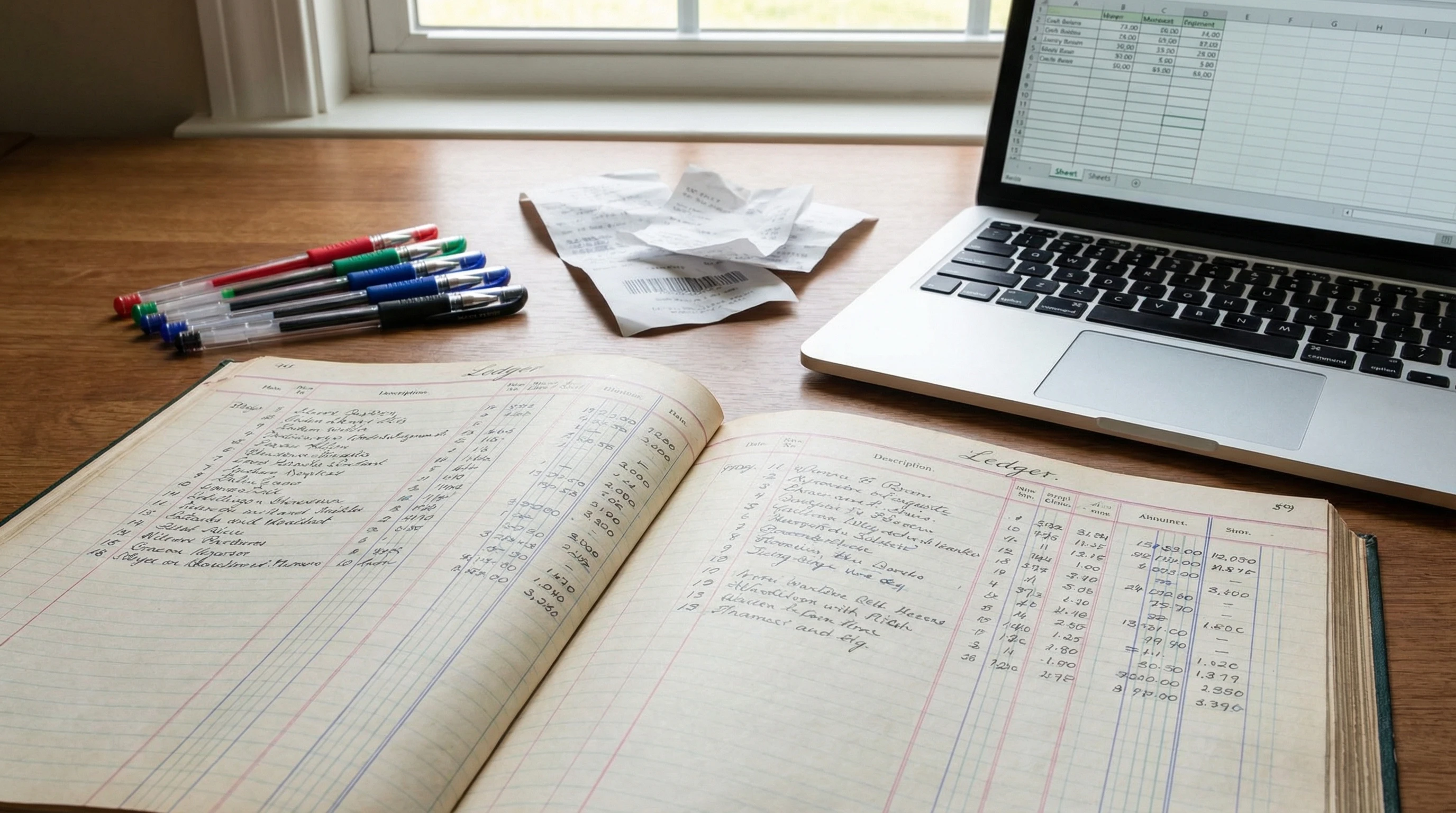
Common Bookkeeping Mistakes Small Business Owners Make
- Mixing personal and business finances: Keeping a separate bank account for your business keeps things clean and avoids big headaches if you ever face an audit.
- Not reconciling accounts monthly: Checking your books against bank statements every month helps catch missing transactions or errors before they spiral. Reconciling regularly builds confidence in your numbers and helps spot fraud early.
- Ignoring small expenses: Even small purchases add up. Keeping track of every expense ensures you don’t lose out on tax deductions or understate your expenses. It’s amazing how minor, regular expenditures, like coffee for client meetings, can eat into your profit over time.
- Waiting until tax season: Scrambling at tax time is stressful. Keeping up on bookkeeping year-round saves you loads of headaches and costly mistakes.
There are other common slipups too, like inconsistent data entry, not saving receipts, or failing to back up digital records.
By setting aside a little time each week for administrative tasks, you can prevent most of these problems before they start.
Tools That Make Bookkeeping Easier
You don’t have to do everything by hand.
There are plenty of tools that make bookkeeping chores a lot smoother, including:
- Accounting software: Programs like QuickBooks, Xero, and Wave do a lot of the heavy lifting, tracking revenue, expenses, and even generating reports automatically. Many come with mobile access, so you can scan receipts or monitor cash flow on the go.
- Spreadsheets: Handy for the basics, especially if you’re comfortable with simple formulas for tracking cash flow or expenses. Free templates online can help you get started quickly if you’re not ready to jump into software yet.
- Hiring a bookkeeper: If things start feeling overwhelming, even hiring someone for a few hours a month can save you time and stress. An experienced bookkeeper can also alert you to potential issues and train you on best practices.
- Automation tools: Many banks and apps let you automatically import and categorize transactions, so you’re not manually entering every detail. Automation can shrink your bookkeeping workload and reduce the risk of mistakes.
Choosing tools that match your business size and comfort level can take bookkeeping from a drag to a task you barely notice.
If you aren’t ready to commit to advanced software, start with manual systems and graduate up as your needs grow.
Don’t hesitate to reach out to other small business owners in your network for tool recommendations that have worked for them.

Final Thoughts: Strong Books Build Strong Businesses
Bookkeeping isn’t about ticking boxes for tax season; it’s about understanding and staying on top of your business money so you can make choices with clarity and confidence.
Well-organized books let you move quickly, plan for growth, and know exactly where your business stands every day.
That kind of peace of mind is totally worth the upfront effort. Even if you started your business mainly for the passion, being on top of bookkeeping is what keeps your dream running long term.
Plus, when you’re ready to bring in partners, seek a loan, or even sell your business someday, solid financial records will support you at every step.
Want to Build a Business With Strong Financial Foundations?
If you’re serious about building a sustainable income:
- 🎥 Get FREE access to 4 powerful masterclass videos
- 📘 Plus a beginner-friendly guide to building online income streams
- 🚀 Learn how to grow revenue while maintaining financial clarity