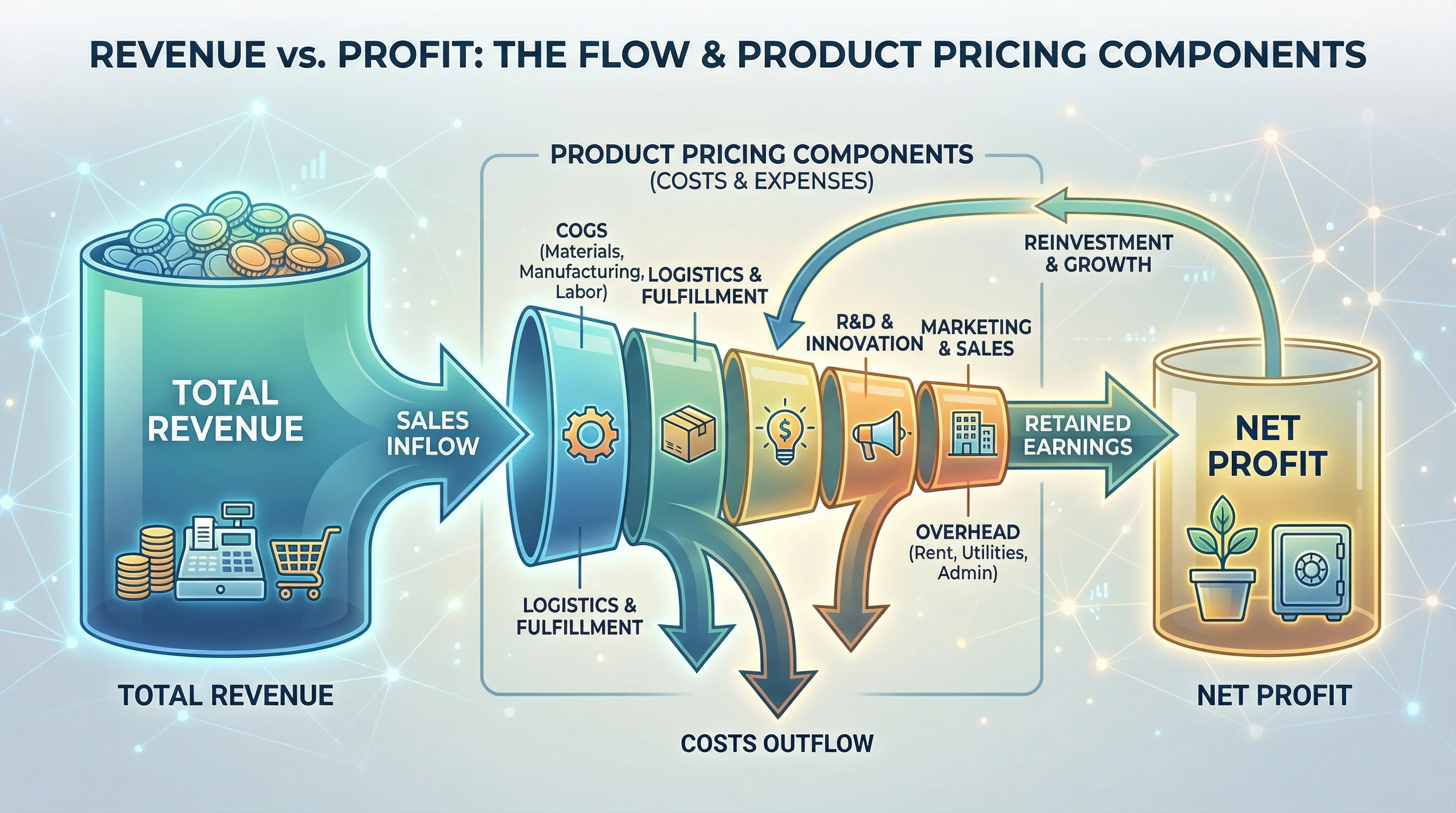
Making sales feels great, but I’ve learned that it’s possible to rack up plenty of transactions and still end up with less money than expected. This usually happens when I confuse revenue with actual profit.
Revenue is the total money a business brings in from sales—it’s the shiny number everyone wants to talk about.
Profit tells a different story.
It’s what’s left after all expenses are paid.
Getting a grasp on how profit margins work is really important for keeping my business healthy, growing, and less stressful in the long run.
Figuring out profit margins doesn’t need to be complicated, either.
I’m going to break it down with a step-by-step method, including the easiest formulas and some real-life examples.
What Is Profit Margin?
Profit margin is a percentage that shows how much money I keep from each dollar of sales after all the costs to produce and sell my products.
There are a couple of key types:
- Gross profit margin: This is what I get after subtracting the direct costs of making my product (like materials, labor, packaging), but before taking out things like rent or marketing fees.
- Net profit margin: This one goes a step further, taking into account all expenses including things like utilities, shipping, taxes, and marketing.
People sometimes get mixed up between markup and margin.
Markup is how much I add to my cost to set the selling price, while margin is how much of the sales price is actual profit.
They’re related but not quite the same thing. Knowing which one I’m looking at keeps me from making some costly pricing mistakes.
Why Profit Margin Is Critical for Small Businesses
- Pricing decisions. Profit margin guides my pricing, helping make sure I’m not undercharging or leaving money on the table.
- Cash flow stability. Healthy margins mean I have enough cash to cover bills, emergencies, or the inevitable slow season.
- Growth planning. Strong profit margins free up funds for hiring, new inventory, or expansion.
- Investor readiness. Investors and lenders look at my profit margins to judge the health and future of my business.
- Avoiding underpricing. Low or unclear margins make it easy to fall into the trap of selling at a loss or barely breaking even.
How Do I Calculate Profit Margins for My Products?
The most practical way is to break it down step by step.
Here’s how I handle it:
- Calculate Your Cost Per Product
First, I figure out the total cost to sell just one unit. I add together:- Production/materials cost
- Packaging (like boxes or inserts)
- Shipping or delivery costs per product
- Payment processing fees (like credit card transaction fees)
- Any marketing or advertising costs associated with a single sale (for example, if I run paid ads exclusively for that product)
- Determine Your Selling Price
This is the price people actually pay at checkout, before adding any sales tax or after any discount I apply most of the time. - Use the Profit Margin Formula
Here’s the formula that keeps things simple:
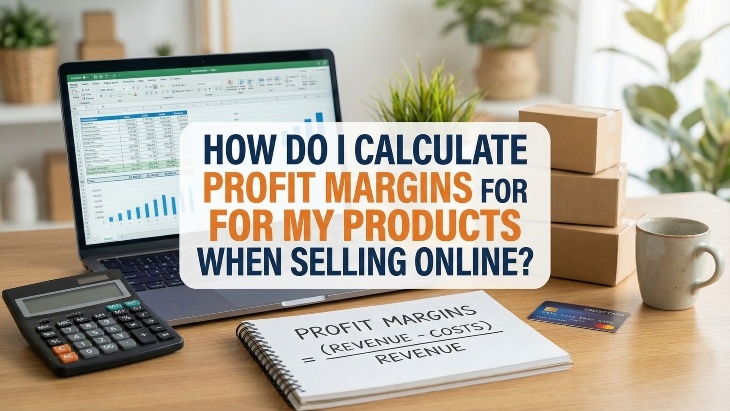
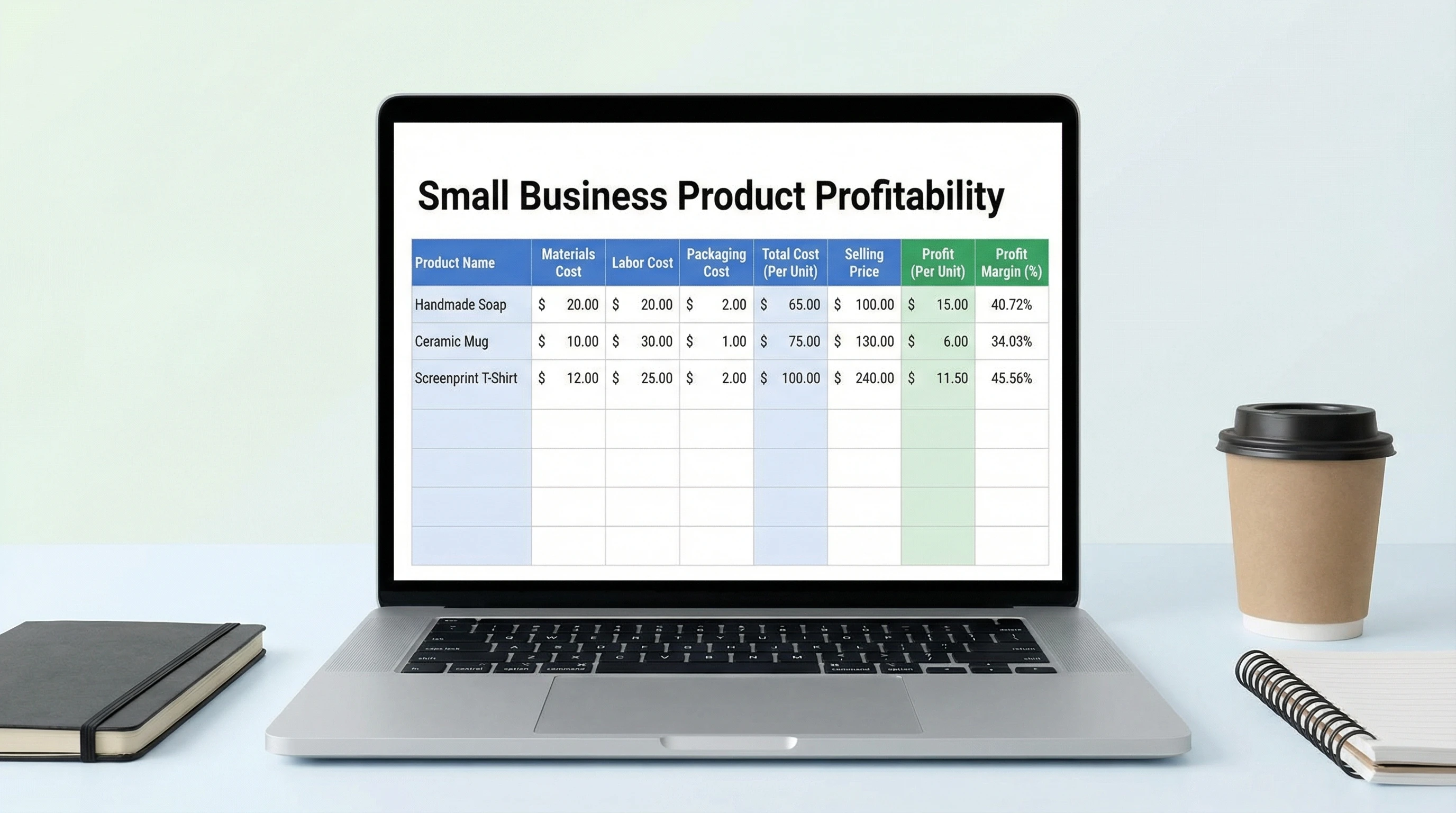
Profit Margin (%) = (Selling Price – Cost) ÷ Selling Price × 100
All I’m doing is finding the profit for one sale (take the selling price, subtract the total cost), then turning that number into a percentage of the selling price. That tells me, in plain language, what slice of every sales dollar is actual profit instead of just covering my costs.
Example: Profit Margin Calculation (With Real Numbers)
I’ve got an example that makes it pretty clear:
- Let’s say my cost for a product (after gathering up materials, packaging, shipping, payment fees, and a bit of ad spend) is $20.
- I decide my selling price is $50.
- Profit per item: $50 minus $20 gives me $30.
- Plugging it into the formula: ($50 – $20) ÷ $50 × 100 = 60% profit margin.
That means for every $50 sale, $30 is profit and the other $20 covers the real costs per product.
Super easy, but really useful to know on every product I sell.
What Is a Healthy Profit Margin for Small Businesses?
I get asked about target profit margins a lot, and it’s a good question because numbers vary a bunch by industry.
Here’s what I’ve seen in practice:
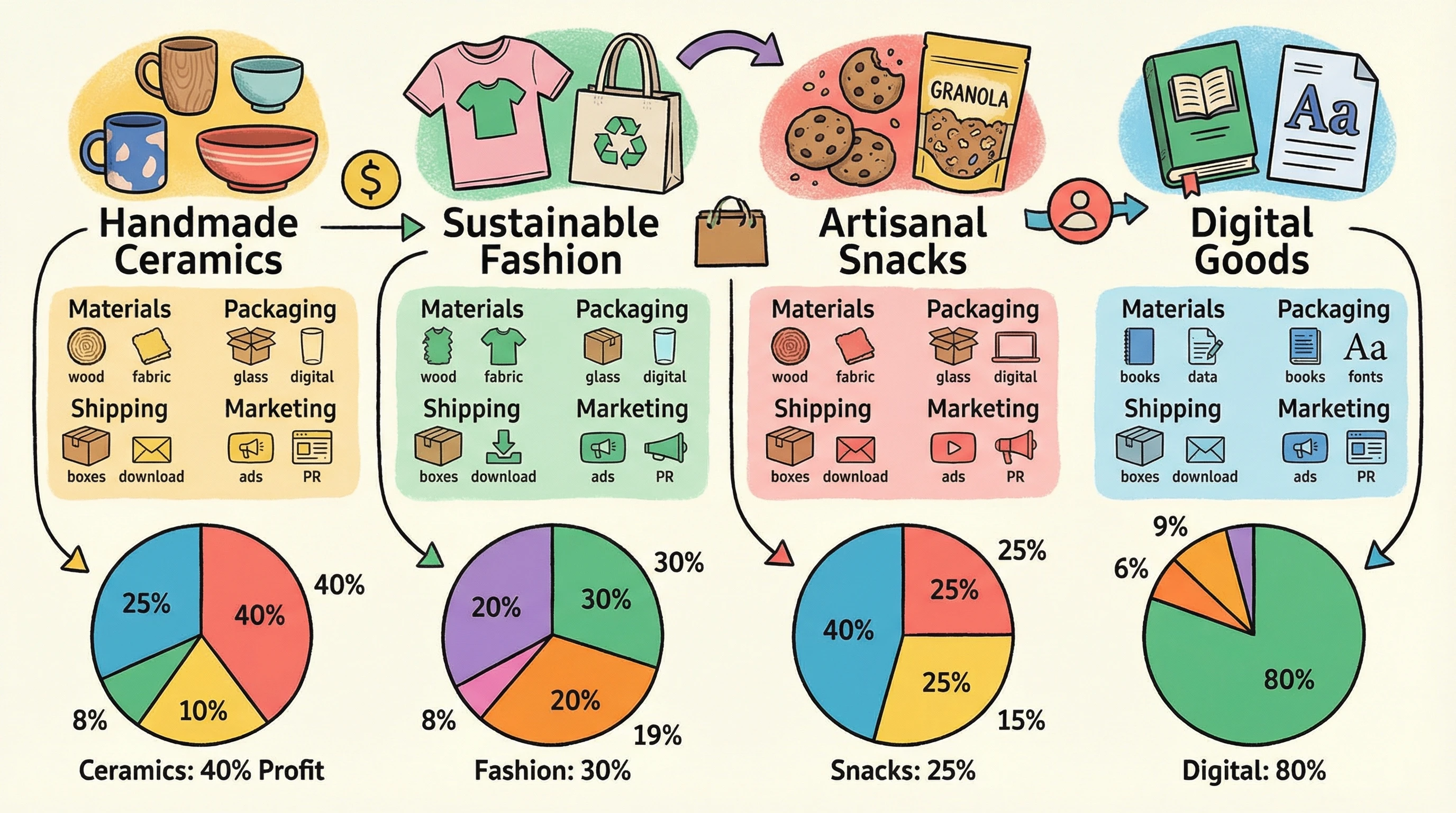
- Physical Products: Most small businesses try for gross margins between 30% and 50%. Higher is great, but tough in many industries where costs are high or competition is fierce.
- Digital Products: These often have margins between 60% and 90%, sometimes even higher, since there’s usually just the initial creation cost and almost no production or shipping expense after that. This is a big reason why I love recommending digital business models and affiliate offers.
- Service Businesses: Margins can range anywhere from 20% to 80%, depending on expertise, expenses, and the unique services offered.
The main takeaway: healthy profit margins aren’t one size fits all.
Industry averages can point me in the right direction, but the goal is to stay high enough to pay myself well and reinvest in my business without burning out.
A useful exercise is to check out some industry reports or even look at a couple of competitors’ pricing structures.
That can give me a better feel for what profit margins are possible and common in my particular space.
If I find that my margins are below average, that’s a signal to check out my expenses, rethink my offers, or get creative with pricing.
Common Profit Margin Mistakes to Avoid
- Forgetting hidden costs: Skipping over things like payment fees, packaging, or ‘free’ shipping drags margins way down and eats up profits fast.
- Confusing markup with margin: Markup feels satisfying, but if I don’t know my actual margins, my pricing can get out of whack.
- Pricing emotionally: If I set prices just to compete or based on what “feels right,” I often end up with bad margins that make me stressed when bills are due.
- Not reviewing margins regularly: Costs change, shipping rates go up, suppliers can surprise me. Checking margins at least once a quarter helps keep profits predictable.
- Trying to compete only on price: Competing just by lowering prices usually means racing to the bottom, with lower (or even negative) margins.
How to Improve Your Profit Margins
- Increase pricing strategically: Raising prices by even a small amount can quickly boost margins, especially if customers see added value. Sometimes, throwing in bonus content, faster shipping, or special packaging gives a positive perception that justifies a price increase.
- Reduce supplier or production costs: Negotiating with suppliers, buying in bulk, or switching to more cost-effective packaging pays off. I’ve found that rethinking even one piece—like using a lighter box for shipping—can add up to real savings.
- Bundle products or create multipacks: This can grow average order value and maximize profit per sale. I often bundle popular products with slower-moving ones, which helps balance stock and makes a more appealing offer to customers.
- Improve the perceived value: Sharper branding, better packaging, and excellent customer service encourage customers to pay a little more. Even offering personalized notes or how-to guides boosts overall value and customer loyalty.
- Sell higher margin digital or affiliate products: Shifting some focus to digital goods, online courses, or affiliate offers helps offset thin margins on physical inventory. It’s a good way to add income streams that are less tied to manual labor or inventory costs.
- Add backend or repeat offers: Following up with related products or services for past buyers builds loyalty and adds more revenue without extra marketing costs. For example, creating a VIP customer list or offering exclusive deals to repeat buyers keeps them coming back and helps smooth out slow months.
Another tip is to set up a system for tracking expenses and profits weekly or monthly.
This habit helps me spot issues or new cost-saving opportunities before my margins take a hit.
Keeping an eye on the numbers, even in a simple spreadsheet, is key. If you’re not comfortable with spreadsheets, there are plenty of user-friendly apps designed for small business owners.
Want to keep making your business more profitable, but feel stuck on cash flow, budgeting, or separating your personal and business finances?
I’ve written guides on startup budgeting basics, and how to separate business and personal finances the easy way. They’re all designed to make money management simpler for busy entrepreneurs.
Want to Build a More Profitable Online Business?
Understanding profit margins is an important first step.
The next move is setting up income streams that are easy to scale without huge overhead.
If you’re serious about making money online, it’s worth checking out my free masterclass video giveaway and business guide.
This bundle I out together will show you how 7 figure earners are making tehir money using free social media methods WITHOUT needing a huge following.
👉 Sign up for my free giveaway here.
Frequently Asked Questions
Question: Can I use online calculators to figure out my profit margins?
Answer: Yes! Many online calculators do the math quickly. But I still like running the basic formula by hand occasionally to get a feel for where money is really going.
Question: How often should I check my profit margins?
Answer: Every quarter at a minimum works for most small businesses. I like to double-check whenever I make a big change, such as switching suppliers or launching a new product.
Question: Are profit margins the only thing I need to care about?
Answer: Margins are super important, but so are cash flow, market demand, and customer experience. All of these work together to build a business that lasts.
Final Thoughts
No matter whether I’m selling t-shirts, ebooks, or consulting services, profit margin gives me a clear, quick way to check my business health.
Calculating, reviewing, and improving margins over time helps me stay profitable and ready for whatever comes next.
If you want more tips on running a lean and profitable business, don’t forget to check out my guides above and start tracking your numbers today!