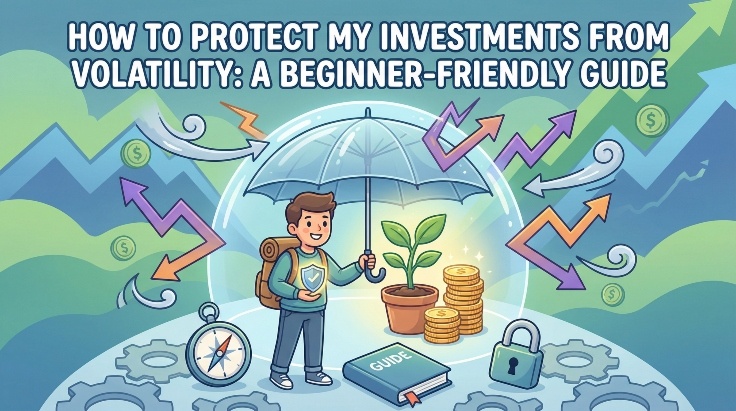
Protecting your investments from market volatility can feel overwhelming, especially if you’re just getting started.
Markets are known for their ups and downs, and those swings can trigger a wave of emotions in even the most levelheaded investor.
But here’s the thing: the rollercoaster nature of markets doesn’t have to derail your financial plans.
In fact, learning how to handle market bumps calmly and having a clear plan makes it much easier to grow your money over time without too much stress.
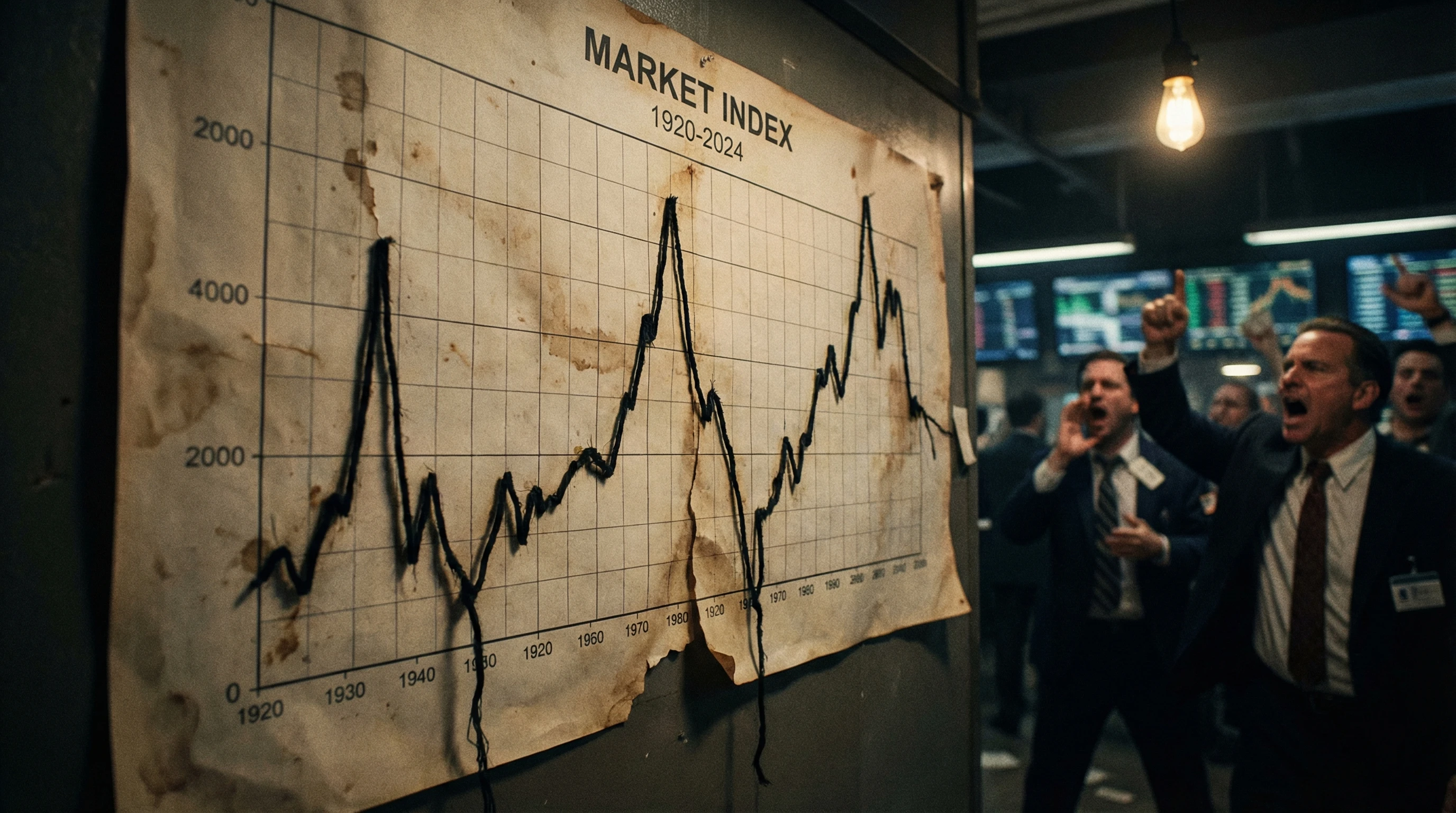
Short-term worry can lead investors to make sudden, emotional moves that do more damage than any market downturn.
The real goal is to keep your hard-earned money as safe as possible while still allowing it to grow over the years.
This guide is all about making sense of volatility, so you know what to expect, and you can confidently stick with your plan, even when the headlines get loud.
What Is Market Volatility?
Market volatility sounds complicated, but it’s really about how much prices for things like stocks and funds move up and down in a certain period of time.
A highly volatile market might jump or drop several percentage points in a day, or even in an hour.
On the other hand, a calm or less volatile market barely budges from day to day.
Fluctuations in the market mostly happen because of changing news, shifting interest rates, business earnings reports, or global events.
Sometimes, the reasons for the swings aren’t even clear.
What’s important to know is that short-term movement (like daily price swings) is usually much sharper than long-term growth. Over decades, markets look more like an upward-trending zigzag than a wild rollercoaster.
Volatility isn’t always a bad thing either.
Without those swings, investing would be predictable but boring, and returns would be a lot lower. Ups and downs are just part of the adventure.
Recommended Reading: How To Build A Balanced Investment Portfolio For Long-Term Growth On Any Budget
Why Investors Panic During Volatile Markets
When prices drop quickly, it’s normal to feel anxious.
Watching your account balance shrink can make you want to hit the sell button and run to safety. This reaction is actually based on human psychology. Losses feel much more painful than gains feel good.
News headlines and social media tend to hype up the drama, too.
Bad days in the market get more attention, leading to a loop of fear that convinces people to make rushed decisions.
If you don’t have a long-term plan, it’s way easier to let these emotions win and try to time the market by getting out at exactly the wrong moment.
Panic selling often locks in losses and makes it harder to recover once things bounce back.
Diversification: Your First Line of Defense
Diversification is just a fancy way of saying “don’t put all your eggs in one basket.”
When you spread your investments across different types of things, like stocks, bonds, real estate, and cash, you lower your chances of getting hurt badly when one area takes a hit.
One way to diversify is by dividing your money among different asset classes:
- Stocks: Potential for higher returns but more ups and downs.
- Bonds: Usually steadier, with slower growth.
- Cash or cash equivalents: Super stable, but your money grows very slowly.
- Alternative assets (real estate, commodities): Not always linked with the stock market, so they can add another layer of safety.
It also helps to diversify across geographies (like having some money in international investments) and different industries or business sectors.
If one part of the world or one industry gets into trouble, you’re not left holding the bag with all your money in that spot.
Build a Portfolio That Matches Your Risk Tolerance
Everyone has a different comfort level when it comes to risk, and that should guide how you build your investment mix.
Some folks are naturally more cautious, while others don’t mind seeing wide swings if there’s a chance for bigger rewards.
What works for your neighbor might not work for you, especially if you stress over every dip or check your portfolio ten times a day.
Generally, investors are grouped into three categories:
- Conservative: Mostly into bonds and cash, slow and steady approach.
- Balanced: A mix of stocks, bonds, and other assets, built for growth but with some protection.
- Aggressive: Mostly stocks or riskier investments, aiming for higher growth but with bigger ups and downs.
Your investing time horizon—how long before you’ll need the money—matters more than your ability to time the market.
Someone in their 20s or 30s can generally afford to ride out the bumps, while someone close to retirement may want more stability.
The longer you can keep your money invested, the less those short-term dips matter in the end.
As an example, if you’re young and investing for retirement that’s decades away, you can weather more volatility and take some calculated risks for bigger long-term gains.
However, if retirement is just around the corner, you’ll want a steadier portfolio with a higher share of bonds and cash equivalents to avoid panicking if the market suddenly drops just before you need the money.
Use Defensive Investment Strategies
Dollar Cost Averaging
This strategy means you regularly put a fixed amount of money into your investments—say, every month—no matter what the market is doing. Sometimes you buy when prices are up, sometimes when they’re low.
Over time, this often helps you avoid buying everything at a peak and can lead to a better average purchase price.
Rebalancing
Every once in a while, your portfolio’s mix might drift as certain investments grow faster than others. Rebalancing just means adjusting your holdings so you keep the percentages where you want them.
For example, if your stocks did really well this year and now make up more of your portfolio than you’d planned, you might sell a bit of those and buy more bonds or cash equivalents.
This keeps your risk level steady, even when markets get rowdy.
Holding Quality Assets
During shaky markets, high quality assets, such as strong companies with a history of steady profits or high rated government and corporate bonds, often hold up better than riskier picks.
Having a chunk of your money in these types of investments offers a layer of stability that can help cushion rough patches.
Keeping Cash Reserves
Having some cash or easy to access savings set aside is pretty handy during downturns.
It means you won’t have to sell investments at a bad time if you need money, and it gives you options to buy into great opportunities if markets drop.
Avoid These Common Mistakes During Volatile Markets
- Selling during dips: It’s tempting to bail when prices slide, but this locks in losses and means you probably miss out on the rebound.
- Reacting to headlines: News is designed to grab attention, but reacting to every negative story leads to overtrading and missed growth over time.
- Chasing ‘hot’ investments: FOMO is real, but jumping into hyped up stocks or trends late in the game often leads to disappointment.
- Overtrading: Frequent buying and selling racks up fees and taxes, and it’s tough to consistently make smart timing moves.
Patience is really important; sometimes the best move during market storminess is to do nothing at all.
If you find yourself tempted to make changes every time there’s news, pause and review your plan before making any decision.
Successful investors know that sticking with their strategy, even when it’s tough, ultimately works out better over the long haul.
How Different Asset Classes React to Volatility
Each type of investment reacts differently to wild markets.
Here are the basics:
- Stocks: Stocks can drop fast during rough times, but history shows they tend to recover and grow over the long haul.
- Bonds: Especially high-grade and government bonds, these hold steadier and can actually go up in value when investors get scared of stocks.
- Real Estate: Property values don’t usually swing as much day to day, but can still be affected by wider economic trouble. Real estate can also provide income through rent, which sometimes offers a cushion during down markets.
- Crypto: Cryptocurrencies are known for their wild swings; gains and losses can happen quickly and unpredictably.
- Cash equivalents: Savings accounts, CDs, and money market funds are steady but don’t offer much growth beyond inflation.
It’s important to know how these assets interact with each other.
When stocks are falling, bonds often hold steady or even rise, providing a buffer. Including a mix in your portfolio can help smooth out the wildest swings.
Long-Term Mindset vs Short-Term Fear
Volatility can shake your faith, but a long-term approach makes all the difference. Looking back, markets have always bounced back from downturns, and the biggest gains often come in the years right after a tough patch.
Missing out on these rebounds can hurt your returns way more than sitting tight through a dip ever will.
Investors who stay focused on the big picture and avoid knee-jerk reactions tend to end up way ahead.
Sticking to your plan, even when it feels uncomfortable, is super important if you want to actually grow your wealth over time.
Remember, some of the best investment days often follow the worst, so selling out during market storms can mean you miss out on key recovery moments.
Tools and Habits That Help Reduce Risk
- Automatic Investing: Setting up regular contributions makes it way easier to stick to your plan; no need to second-guess your timing.
- Portfolio Reviews: Checking in a few times a year (instead of every day) helps you stay on track and see if your goals or risk comfort level have changed.
- Keeping an Investment Plan: Writing out your goals and how you’ll handle tough times can stop you from making quick, emotional decisions. A solid plan often includes your target asset mix, when you’ll review your portfolio, and reasons you’d make changes (ideally based on life changes, not market swings).
- Learning Continuously: The more you know, the less rattled you’ll be by normal market swings. Reading books, following trusted sources, or talking with a financial advisor all help.
Other helpful habits include tuning out the noise from sensational headlines, reminding yourself why you invested in the first place, and being patient. Financial success is really a mix of smart strategy, ongoing education, discipline, and patience.
Wrapping Up: Volatility Is Normal, Panic Is Optional
Market bumps are totally normal, and you can weather them without a ton of stress.
By diversifying, sticking to your risk comfort level, and using defensive strategies, you set yourself up for much more reliable growth over the years.
The key is focusing on your bigger financial goals and not letting short-term ups and downs knock you off your path.

Building wealth isn’t only about dodging bad market days. It’s about long-haul thinking and growing your income, too.
If you’re aiming for more financial security, investing is just one part of the puzzle; boosting your income helps speed up the whole process.
If you are interested in learning how to build online income streams, pick up long-term financial skills, or create extra stability, there are some quality resources available.
👉 Check out my #1 recommended training platform here
This is a platform called Wealthy Affiliate. It’s where I got started first with my online business back in 2015. It’s beginner-friendly, and you can test out their training by registering a free starter account here. Alternatively, check out my review of Wealthy Affiliate here.
Regards and wish you Tons of Success In Your Investing Adventures
Roopesh