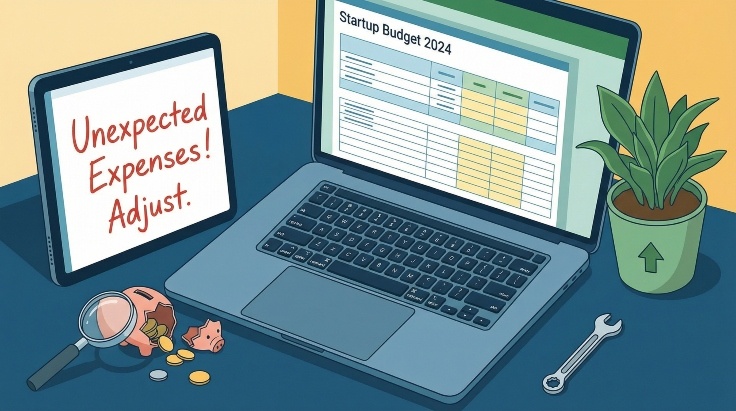
Startups rarely go according to script. One minute, you’re cruising through your financial plan, the next, a surprise bill pops up and flips everything upside down.
Maybe your favorite software subscription jumps in price, a marketing campaign needs more cash, a laptop fizzles out unexpectedly, or some legal hiccup catches you off guard. I’ve been there.
I’ve watched my carefully planned budget take a hit thanks to expenses I never saw coming.
Honestly, it’s not usually the idea or the strategy that trips up founders. It’s a lack of flexibility, especially regarding money.
If you want to keep your startup growing (without letting panic or debt run the show), being able to quickly adjust your budget is crucial.
I’ll show you exactly how to do it in a way that keeps your business moving forward, even when surprise expenses come knocking.

Why Unexpected Expenses Derail So Many Startups
Cash is tight for nearly every founder during those early days. Even with detailed spreadsheets and solid planning, it’s easy to be a little too optimistic about how far your money will stretch.
If your projections from last quarter don’t match what’s actually happening, even a small surprise cost can put a squeeze on your operations.
Most new businesses don’t put aside an emergency fund right from the start. When a crunch hits, the reaction is often stress spending: throwing money at the problem and hoping it goes away, or worse, relying on high-interest loans just to cover basic operations.
To get ahead, building a safety margin into your monthly budget is much smarter than running on hope.
Common Unexpected Startup Expenses
It’s almost guaranteed that some expenses in your first year will catch you off guard.
Here are the ones I see most often:
- Bigger marketing costs: Campaigns that need extra budget for better reach or to fix underperforming ads.
- Software upgrades or hidden subscription fees: That “basic” plan? Sometimes you suddenly need a premium feature or you hit a usage cap.
- Equipment repairs or replacements: Laptops, printers, or production gear can break without warning.
- Legal or compliance bills: Unplanned document filings, permit renewals, or professional advice costs.
- Tax underestimations: Owing more in taxes than expected after a growth spurt.
- Delayed customer payments: Invoices sit unpaid, squeezing your cash stream.
Staying organized, especially with basic bookkeeping skills, makes it a lot easier to spot these expenses before they become a real problem.
If you want the basics, check out my guide to simple bookkeeping concepts.
How to Adjust Your Startup Budget for Unexpected Expenses (9 Practical Steps)
When a surprise expense lands in your inbox, here’s how I handle it step by step. These are tried-and-true ways to stay flexible and keep your workload manageable.
I’ve refined these over the years to make sure you don’t just survive but actually improve your business resilience.
- Pause and Reassess Your Cash Position
- Look at your available cash, not only in your main account, but any reserves you might have tucked away.
- Check which invoices are due soon and what you realistically expect to receive in the next 30 days.
- Input all bill details into a clear, organized list so nothing slips through the cracks during stressful times.
- Separate Essential vs Nonessential Expenses
- Identify what drives revenue or keeps operations moving. These expenses are vital and must be maintained.
- Flag “nice to have” tools, upgrades, and perks for possible cuts. You don’t need software or subscriptions that don’t move the needle.
- Read more on this in my advice about how to avoid lifestyle creep.
- Reprioritize Your Budget Categories
- Shift resources from less important spots (for example, office decor or premium analytics that can wait) to areas that keep your business running.
- Protect things like marketing if it brings in customers, but pause on features or projects that aren’t urgent right now.
- Delay nonurgent equipment upgrades or expansion plans until your footing is stable again.
- Negotiate Payment Terms
- If you owe vendors or suppliers, reach out and ask if you can extend payment terms or split the cost over a few months. Many small businesses are flexible, especially if you communicate proactively.
- Even short extensions can free up valuable cash when you need it most.
- If you’re a regular or loyal customer, ask if there’s room for a short-term reduction or waiver.
- Tap Into Your Emergency Fund (If You Have One)
- This is the moment to use that 2-3 month cash cushion you put aside. That’s exactly what an emergency fund is for.
- If you don’t have one yet, start small—add a percentage of every payment you receive into a separate account. Learn more about this and why it’s important by checking out emergency funds for businesses.
- Adjust Revenue Goals Temporarily
- Boost short-term revenue with quick-win offers, flash sales, or low-hanging services that bring in immediate cash flow rather than waiting for long sales cycles to pay off.
- Run simple promotions, like discounted consulting or bundled deals, to plug any immediate gaps.
- Reduce Owner Draw Temporarily
- If you cut your own pay for a month or two, you can make a real difference to your company’s stability and build up a little breathing room.
- Communicate clearly with anyone you share finances with and focus on the long game here.
- This is also a great reason to have business and personal finances separated.
- Avoid High Interest Panic Debt
- If credit cards and cash advances pop into your mind as a solution, stop and review options. The interest can snowball before you know it.
- Only pursue this route if it’s truly a last resort and if you’re certain you can pay it off rapidly.
- Build a “Shock Absorber” Line in Your Budget
- Insert a 10% to 20% contingency section into your future budgets. This money is always set aside for unexpected surprises.
- Review and refresh this buffer monthly. Building the habit matters more than reaching a perfect number every time.
How Much Should a Startup Set Aside for Unexpected Expenses?
Setting a buffer in your budget is one of the simplest ways to protect yourself against shocks.
As you get started, aim for a 10% to 20% margin each month. That means, if you plan for $10,000 in monthly expenses, try to keep an extra $1,000 to $2,000 ready, just in case.
If you can, build up 2-3 months’ worth of operating expenses as your cushion. This is the gold standard for financial resilience.
I know that sounds tough, but even getting one month ahead can save you from a nasty surprise down the road.
Here’s how these two approaches look in action:
- Contingency fund: A routine budget add-on you plan to spend as needed for unpredictables. It’s baked into your budget and flexible for quick fixes.
- Emergency fund: Set aside in a separate savings account, untouched until a genuine emergency arises—think natural disaster, major client loss, or another big hit.
Mistakes to Avoid When Adjusting a Startup Budget
It can be easy to panic or make impulsive decisions when unexpected expenses arise. Here are common pitfalls to skip:
- Ignoring the issue: Hoping new sales will “just cover it” rarely pans out. Tackling the numbers quickly gives you more leverage to make good decisions.
- Cutting revenue generating activities first: Slashing ads or sales tools for quick savings usually backfires and makes the cash problem worse.
- Mixing personal and business money: Dipping into personal savings temporarily may seem helpful, but it muddies tracking later and can compound the problem.
- Skipping updates to your budget files: If you adjust spending without tracking, it’s much easier to repeat mistakes or forget what you changed.
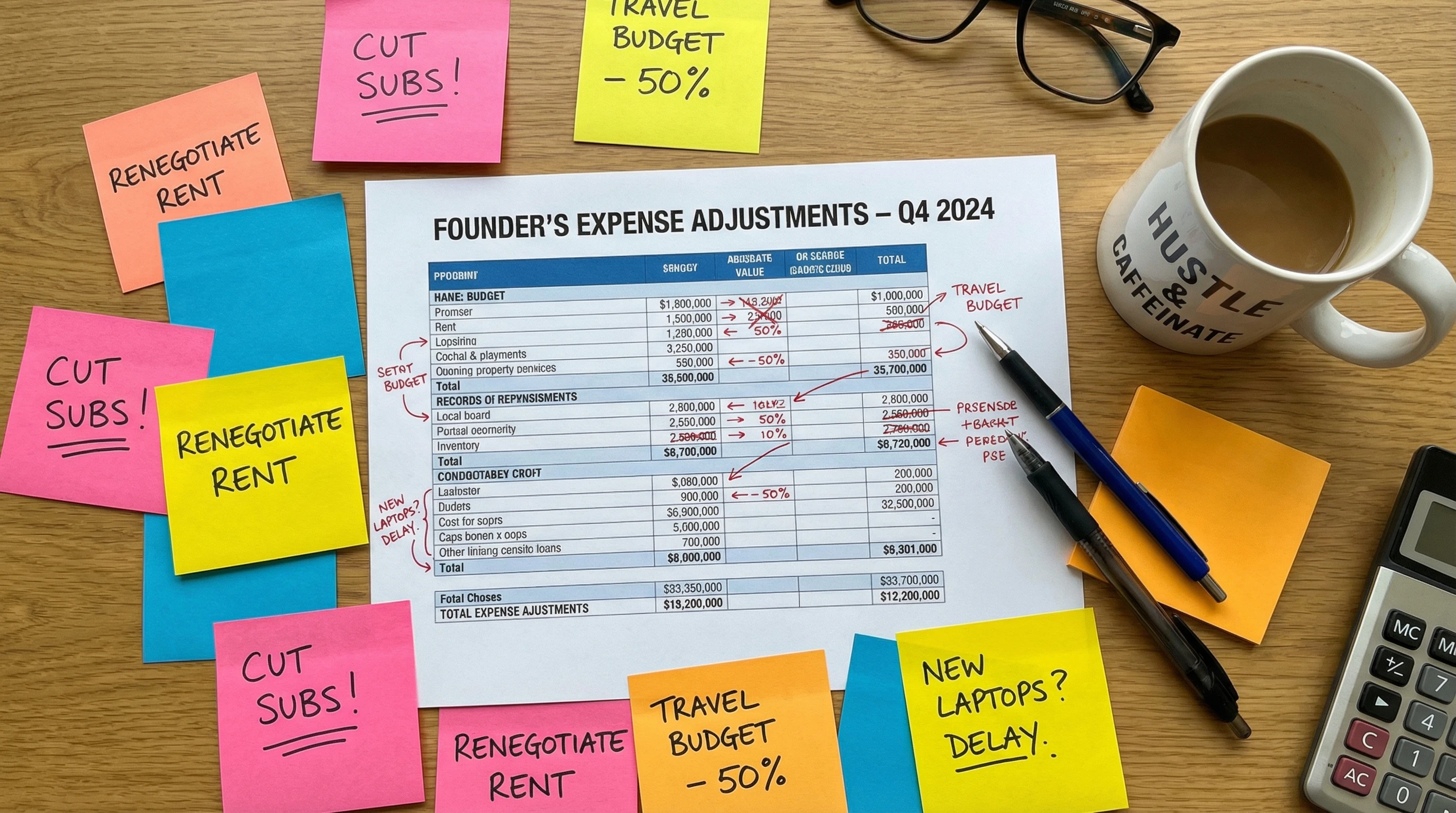
Simple Startup Budget Adjustment Framework
I rely on a four-step process whenever my numbers swing unexpectedly. Here’s a quick version you can use every time curveballs hit:
- Assess: Look at cash balances, income flowing in, and bills that are coming due. Face the real numbers—even if they sting.
- Reallocate: Shift money away from things you can deprioritize into categories that keep the operation moving or plug the urgent holes.
- Stabilize: Pause all nonessential spending, reach out to vendors, and delay new hires or purchases for now.
- Reinforce: Add a shock absorber buffer into future budgets and document what triggered the issue so you can spot warning signs early.
Frequently Asked Questions
Here are quick answers to things founders often want to know when a surprise expense pops up:
Should I use credit to cover unexpected startup costs?
Sometimes, borrowing is unavoidable. If you use credit, pick the lowest possible interest rate and layout a payback plan. Don’t let these quick fixes stack up, as the interest can drain your resources quickly.
How often should I review my startup budget?
Monthly at a minimum. If things are bumpy, weekly check-ins help keep you tuned into the changes. Your numbers will swing quickly, so regular reviews make a big difference.
Is it normal for startups to face surprise expenses?
Absolutely! Some costs are just unpredictable and bound to show up uninvited. The founders who last are those who are ready—not just lucky.
Ready to Build a Startup With Strong Financial Foundations?
Surprise expenses happen to everyone. What truly matters is having the right structure and mindset to handle curveballs without letting your business spin out of control. Want to get proactive?
I’ve created a free training bundle designed to help founders bring in steady income, sidestep money traps, and lay a strong financial base. What you’ll get inside:
- Access to four concise masterclass videos packed with actionable insights
- A user-friendly guide to launching online income streams (even as a complete beginner!)
- Easy-to-use strategies for growing your revenue while keeping your books clean and organized
Grab your spot in the free training bundle here and take the first step towards building a business that keeps thriving, even when the unexpected rolls in.
Talk to you soon
Regards and Take Care
Roopesh